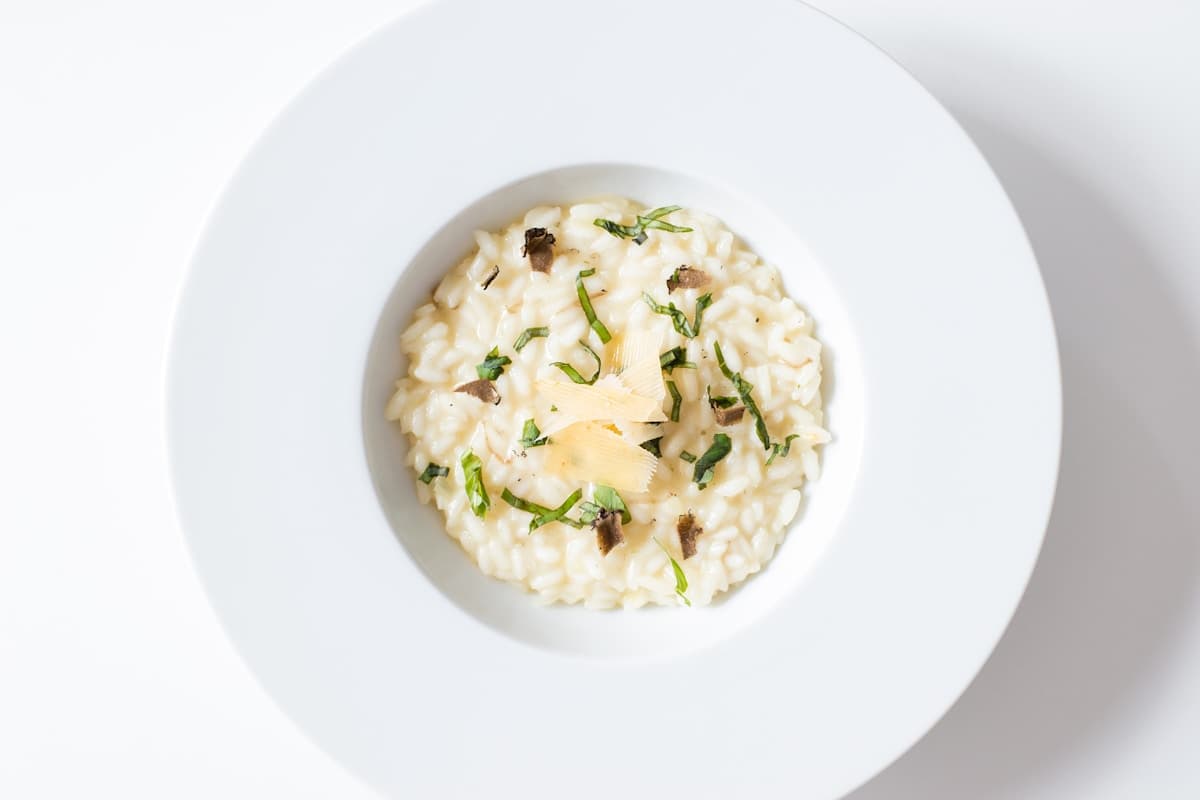
Luxuriously creamy Arborio rice with earthy mushrooms and Parmesan
Creamy Mushroom Risotto
Prep Time
10 min
Cook Time
35 min
Total Time
45 min
Servings
4
About 4 generous servings
Difficulty
Medium
Cost
Moderate
$$

Sarah Chen
(Updated )
Risotto has a reputation for being fussy, but the reality is simpler than you might think. Yes, it requires about 20 minutes of active stirring, but that is less time than most people spend scrolling through their phones. And the reward — a pot of impossibly creamy, luxuriously textured rice studded with earthy, caramelized mushrooms — is well worth the arm workout.
The technique is straightforward: toast the rice in butter, deglaze with white wine, and add warm broth one ladle at a time, stirring as each addition is absorbed. This gradual process coaxes starch out of the Arborio rice grains, creating a naturally creamy sauce without adding any cream. The final enrichment of cold butter and Parmesan, stirred in off the heat, is called mantecatura — an Italian technique that makes the risotto impossibly silky and glossy.
For the mushrooms, we use a combination of cremini and shiitake, sauteed until deeply golden in a separate pan so they stay meaty and caramelized rather than steaming in the risotto. A splash of truffle oil at the end is optional but transformative if you want to push this into special-occasion territory.
Ingredients
Risotto
- 1.5 cups 1 1/2 cups Arborio rice
- 5-6 cups 5-6 cups vegetable or chicken broth, warmed, kept warm in a separate pot
- 0.5 cup 1/2 cup dry white wine
- 1 1 medium shallot, finely diced, finely diced
- 4 tablespoons 2 tablespoons unsalted butter, divided (plus 2 tbsp cold for finishing), 2 tbsp for cooking, 2 tbsp cold for finishing
- 1 tablespoon 1 tablespoon olive oil
- 0.75 cup 3/4 cup finely grated Parmesan cheese, finely grated
- Kosher salt and white pepper to taste, to taste
Mushrooms
- 8 oz 8 oz cremini mushrooms, sliced, sliced 1/4-inch thick
- 4 oz 4 oz shiitake mushrooms, stems removed and sliced, stems removed, sliced
- 2 tablespoons 2 tablespoons unsalted butter
- 2 cloves 2 cloves garlic, minced, minced
- 1 teaspoon 1 teaspoon fresh thyme leaves
- 1 teaspoon 1 teaspoon truffle oil (optional)(optional)
Instructions
Mushrooms
- 13-4 minutes
Heat 2 tablespoons of butter in a large skillet over medium-high heat. Add the sliced cremini and shiitake mushrooms in a single layer — work in batches if needed. Cook without stirring for 3-4 minutes until golden brown on the bottom.
Note:Do not crowd the pan or stir too early. Mushrooms need undisturbed contact with the hot pan to brown properly.
- 22-3 minutes
Stir and cook for another 2-3 minutes until browned on all sides. Add the garlic and thyme, cook 30 seconds until fragrant, and season with salt and pepper. Transfer to a plate and set aside.
Risotto
- 3Low simmer
Warm the broth in a saucepan over low heat and keep it at a gentle simmer. Having warm broth is essential — cold broth shocks the rice and slows cooking.
- 42 minutes
In a large heavy-bottomed pot or Dutch oven, heat 1 tablespoon olive oil and 2 tablespoons butter over medium heat. Add the diced shallot and cook until softened and translucent, about 2 minutes.
- 52 minutes
Add the Arborio rice and stir to coat each grain in the butter. Toast the rice, stirring frequently, for 2 minutes until the edges become slightly translucent and you can smell a nutty aroma.
Note:Toasting is a crucial step — it sets up the rice to absorb liquid properly and adds flavor.
- 61 minute
Pour in the white wine and stir constantly until it is almost completely absorbed, about 1 minute. The pan will sizzle and the sharp alcohol smell will cook off.
- 718-20 minutes
Begin adding the warm broth one ladleful (about 3/4 cup) at a time, stirring frequently. Wait until each addition is mostly absorbed before adding the next. Continue this process for 18-20 minutes until the rice is creamy and al dente — tender with a slight bite in the center.
Note:You may not need all the broth, or you may need a little more. The risotto is done when it flows like lava when you tilt the pot, and the rice is cooked but still has a subtle firmness.
- 830 seconds
Remove the pot from heat. Add the 2 tablespoons of cold butter and the grated Parmesan. Stir vigorously for 30 seconds — this is the mantecatura step that creates the signature creamy, glossy finish.
Note:The cold butter and off-heat stirring are essential. They emulsify into the starch for maximum creaminess without becoming greasy.
- 9
Fold in the sauteed mushrooms and any juices from the plate. Season with salt and white pepper. If the risotto is too thick, stir in a splash more warm broth — it should spread slowly when spooned onto a plate, not hold its shape in a mound.
- 10
Serve immediately in warmed bowls, topped with a drizzle of truffle oil if using, a few extra thyme leaves, and shaved Parmesan. Risotto waits for no one — it begins to set as it cools.
Substitutions
Arborio riceCarnaroli or Vialone Nano rice
Carnaroli is actually preferred by many Italian chefs — it is more forgiving and produces a creamier risotto. Vialone Nano is traditional in the Veneto region.
Cremini and shiitake mushroomsAny combination of mushrooms
Oyster mushrooms, chanterelles, porcini, or a wild mushroom blend all work beautifully. Dried porcini rehydrated in warm water add extraordinary depth.
White wineDry vermouth or extra broth with a splash of lemon juice
Vermouth actually works better than wine in many risotto applications because it is more concentrated. Extra broth with lemon provides the acidity without alcohol.
ParmesanPecorino Romano or nutritional yeast (for vegan)
Pecorino is sharper and saltier — use about two-thirds the amount. Nutritional yeast approximates the savory quality for a vegan version.
Tips & Storage
Pro Tips
Keep the broth warm in a separate pot — adding cold liquid to risotto shocks the rice, creates uneven cooking, and extends the cooking time significantly.
Stir frequently but not constantly. You want to agitate the starch out of the rice, but you also need to let each ladle of broth be absorbed. Stir every 30 seconds or so.
The finished risotto should flow like lava when you tilt the pot, not sit in a stiff mound. Italians call this consistency "all'onda" — like a wave.
Serve risotto immediately — it continues to absorb liquid and thicken as it sits. Warm your bowls in the oven beforehand so it stays creamy longer.
For an even more intense mushroom flavor, add a tablespoon of dried porcini mushroom powder to the broth.
Storage
Risotto is best eaten immediately, as the texture degrades when stored. However, leftover risotto can be refrigerated in an airtight container for up to 2 days. It will become very thick and stiff, which is normal. A classic way to use leftover risotto is to form it into balls, bread them, and fry them into arancini — Italian rice balls.
Reheating
Reheat risotto in a saucepan over medium-low heat, adding a generous splash of broth (about 1/4 cup per serving) and stirring constantly until it returns to a creamy consistency. Stir in a small knob of butter and a sprinkle of Parmesan at the end to refresh the creamy finish. The microwave will work but produces an uneven texture. Alternatively, transform leftovers into arancini — mix cold risotto with an egg, form into balls, bread, and fry at 350°F until golden.
Nutrition Facts
Per serving (About 1 1/2 cups) · 4 servings
Calories480
Protein14g
Carbohydrates56g
Fat22g
Fiber2g
Sugar3g
Sodium640mg
Nutritional values are approximate and may vary based on specific ingredients and preparation methods.
Frequently Asked Questions
- Do I really need to stir the whole time?
- Not constantly, but frequently — every 30 seconds or so. The stirring releases starch from the surface of the rice grains, which is what creates the creamy sauce. You can step away briefly, but this is not a set-it-and-forget-it recipe.
- Can I use regular long-grain rice?
- No. Regular rice does not contain enough of the right kind of starch (amylopectin) to create risotto's characteristic creaminess. Arborio, Carnaroli, or Vialone Nano are essential.
- Why did my risotto come out gluey?
- Usually this means the rice was stirred too aggressively, cooked too long, or too much liquid was added at once. Gentle, consistent stirring and gradual broth additions are the keys to creamy rather than gluey results.
- Can I make risotto ahead of time for a dinner party?
- You can cook the risotto about 70% of the way, spread it on a sheet pan to stop cooking, and refrigerate. When ready to serve, return it to the pot and finish with the remaining broth, butter, and Parmesan. This technique is used in restaurant kitchens.
- Is this recipe vegetarian?
- It is if you use vegetable broth instead of chicken broth. Make sure your Parmesan is vegetarian as well — traditional Parmigiano-Reggiano uses animal rennet. Look for vegetarian-friendly Parmesan alternatives.

About Sarah Chen
Sarah Chen is a professional recipe developer and food editor with over a decade of experience in test kitchens and food media. She trained at the Culinary Institute of America before spending six years developing and testing recipes for national food publications, where she honed her ability to translate restaurant techniques into approachable home cooking. At RecipePool, Sarah leads recipe development, ensuring every dish is tested at least three times for clarity, accuracy, and genuine deliciousness. When she is not in the kitchen, she is browsing farmers markets and collecting vintage cookbooks.
View all recipes →You Might Also Like

AmericanFrench
Lemon Herb Roasted Chicken
A beautifully golden whole roasted chicken infused with lemon, garlic, and fresh herbs — the quintessential Sunday dinner centerpiece.
1 hr 35 min
Medium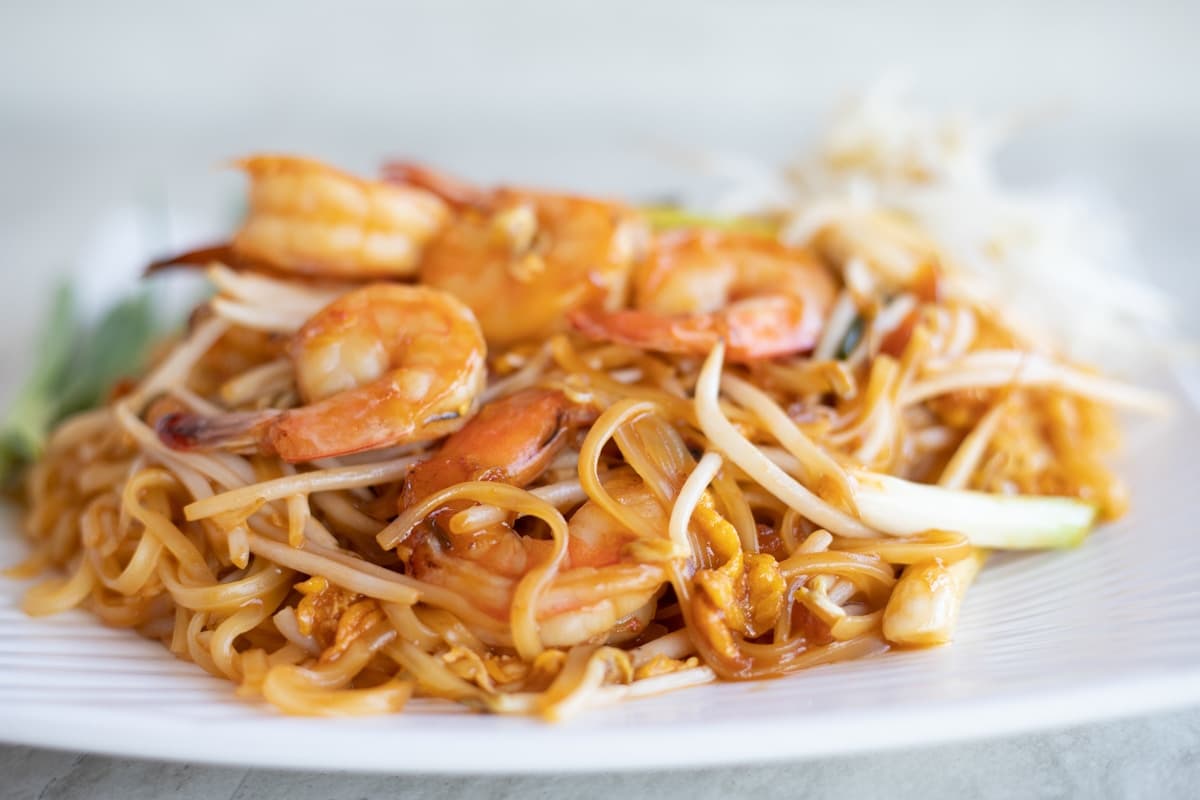
Thai
Vegetable Pad Thai
A vibrant, tangy, and slightly sweet vegetable pad Thai loaded with crispy tofu, crunchy bean sprouts, and a tamarind-based sauce that hits every flavor note.
30 min
Medium
Mexican
Smoky Black Bean Tacos
Smoky, spiced black beans piled into warm tortillas with a bright lime-cabbage slaw, creamy avocado, and a drizzle of chipotle crema.
20 min
Easy
KoreanAsian
Korean Beef Bulgogi
Thinly sliced beef marinated in a sweet and savory blend of soy sauce, Asian pear, sesame oil, and garlic, then grilled until beautifully charred. A Korean BBQ classic.
2 hr 30 min
Medium